Morning — phone in hand
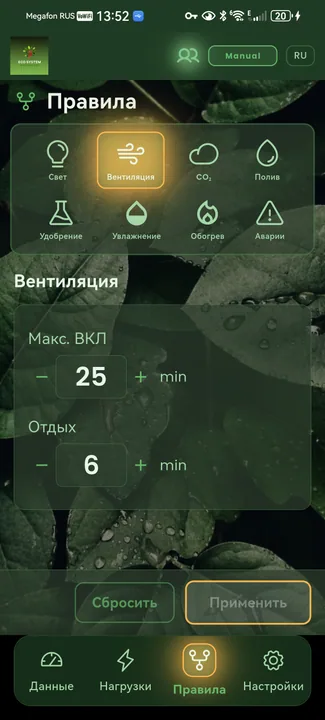
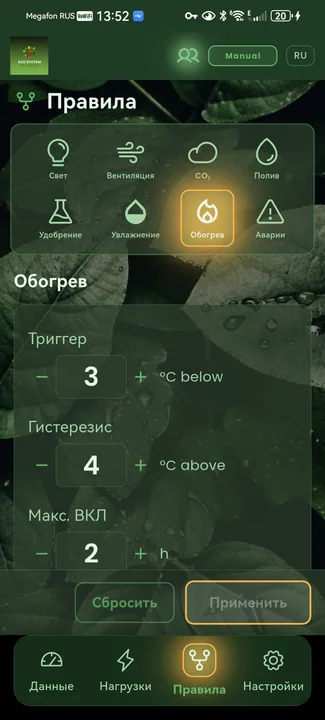
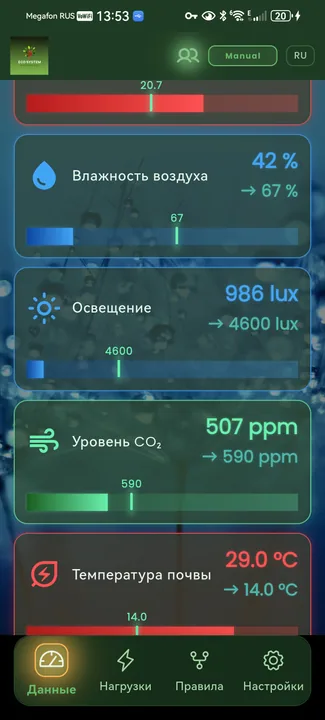
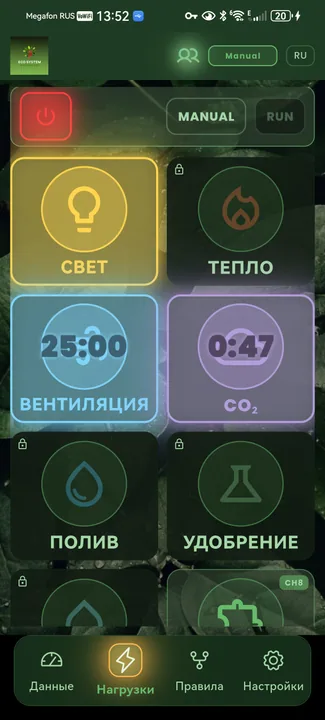
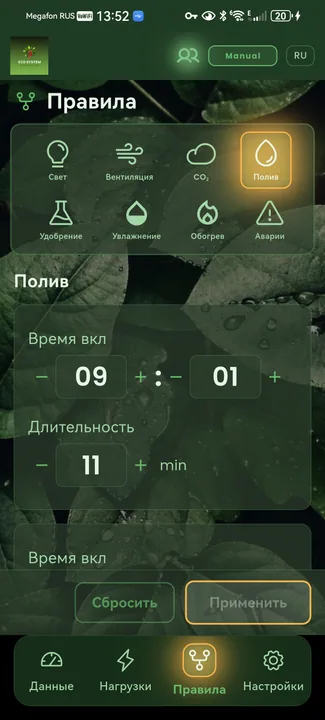
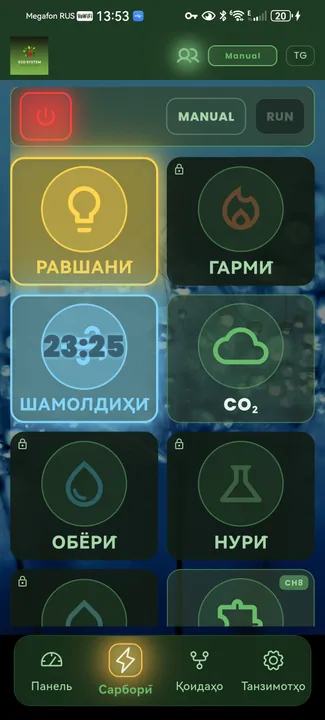
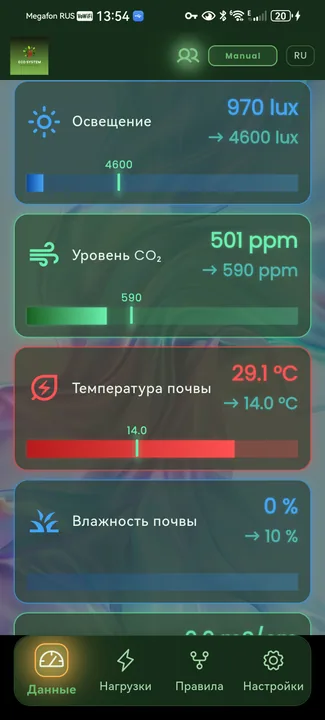
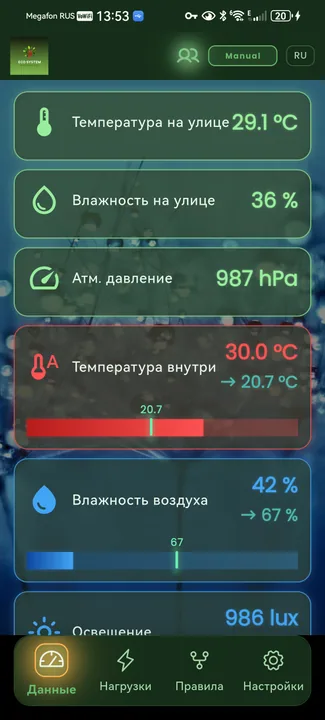
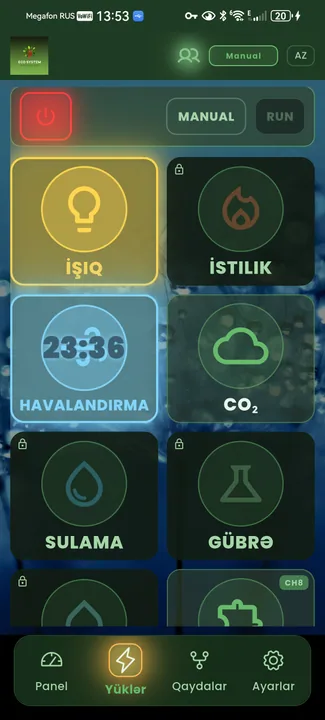
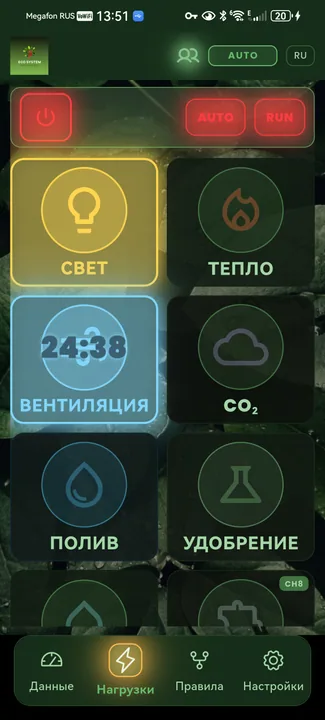
You are still in bed and the app already shows: +22 °C inside, humidity 65%, vents were open overnight. One tap turns on extra heating before the morning misting. Another starts watering the second bed.
Dear growers — meet the ecosystem that works for you.
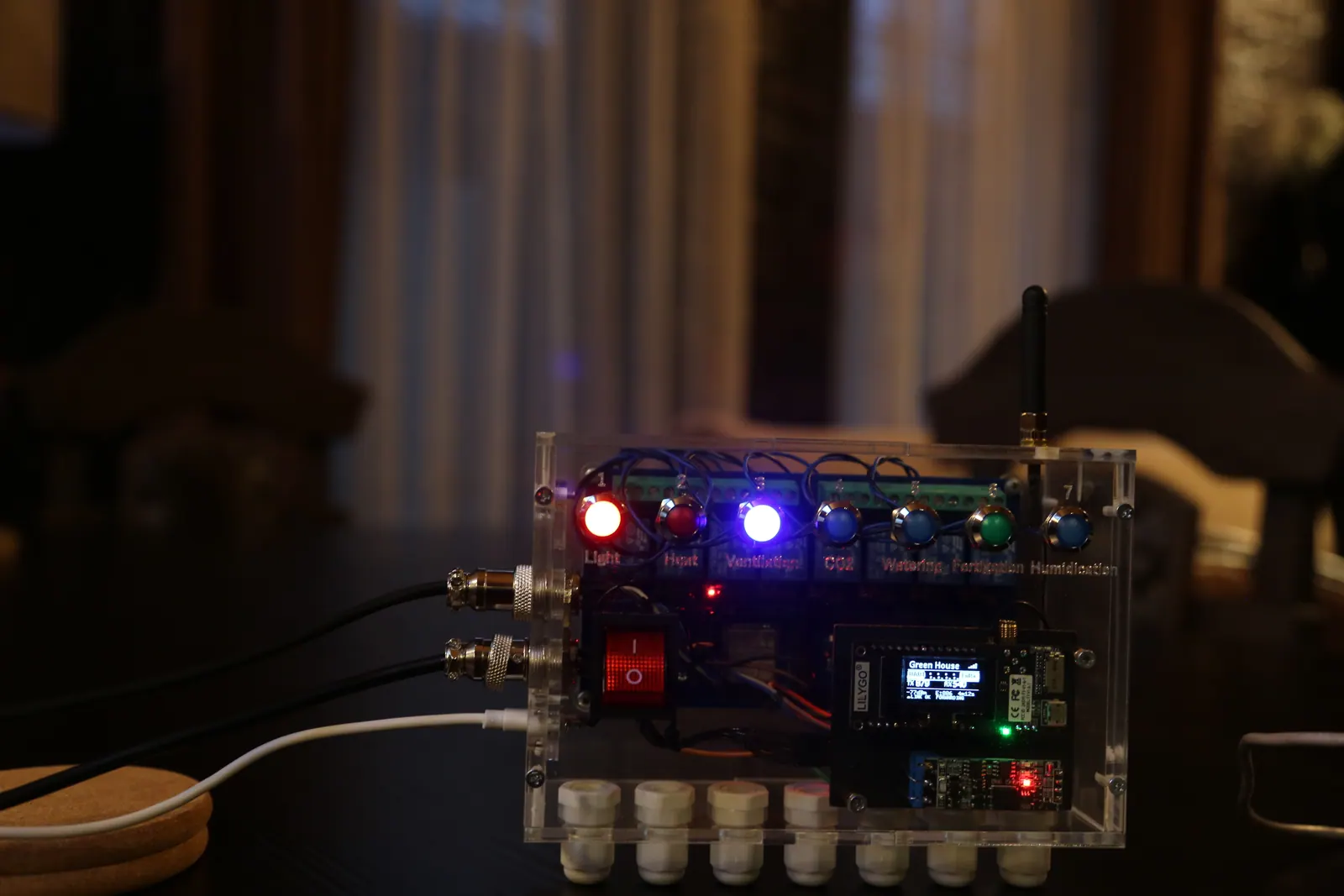
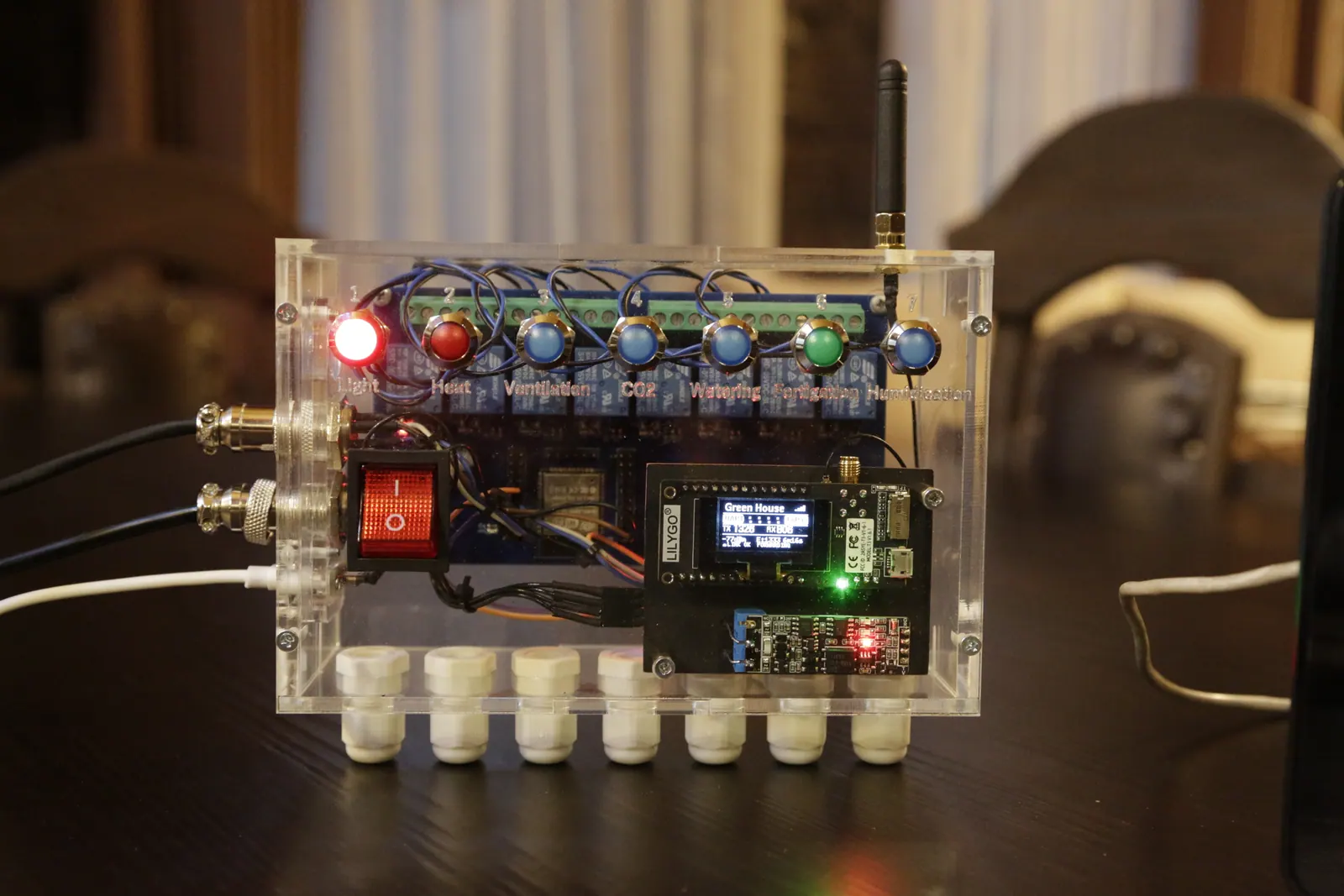
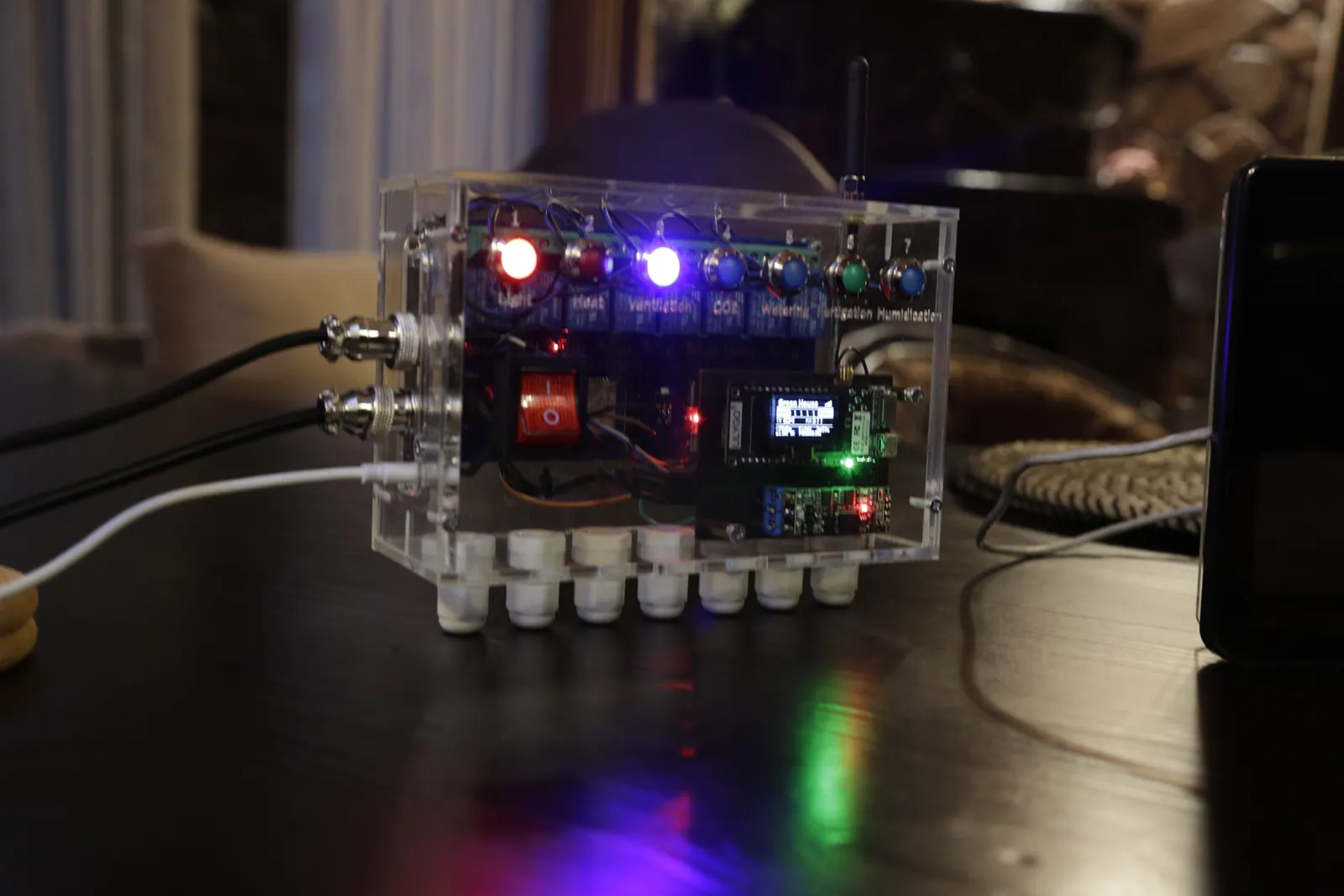
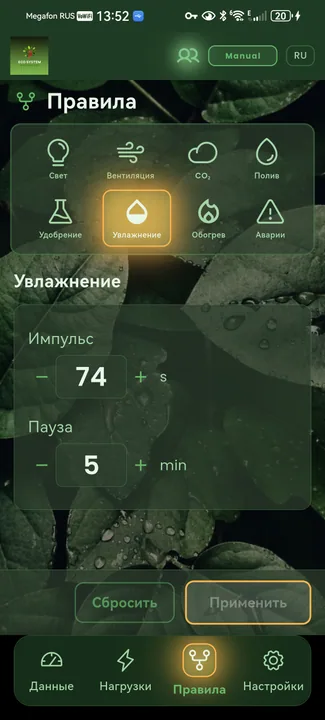
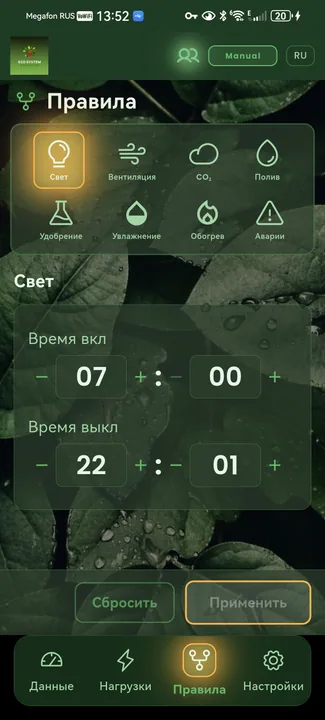
While you are hundreds of kilometers away — in another city, at work, on vacation — your greenhouse tirelessly takes care of the future harvest. It lives autonomously: watering, venting, switching lights and heating on, keeping humidity and CO₂ in check. And at any moment you can step into the algorithm, adjust the trigger conditions for any load — you stay in control and see everything on your phone or tablet.
You are still in bed and the app already shows: +22 °C inside, humidity 65%, vents were open overnight. One tap turns on extra heating before the morning misting. Another starts watering the second bed.
The temperature outside jumped to +34. Without you, the panel spotted the overheating, cracked the vents open, kicked on the fogger. Look in the evening — you will see what fired and when. The plants never noticed the heat.
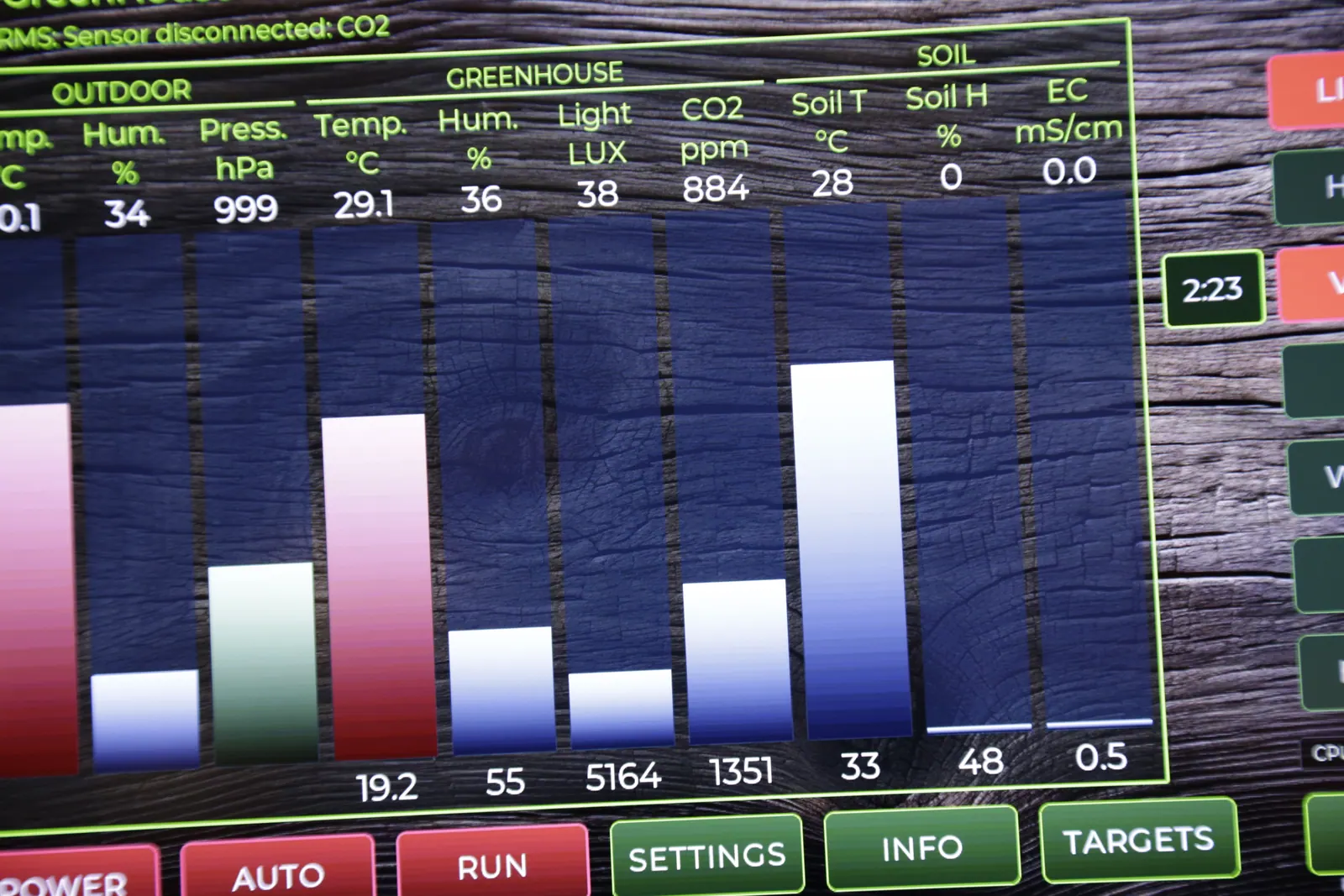
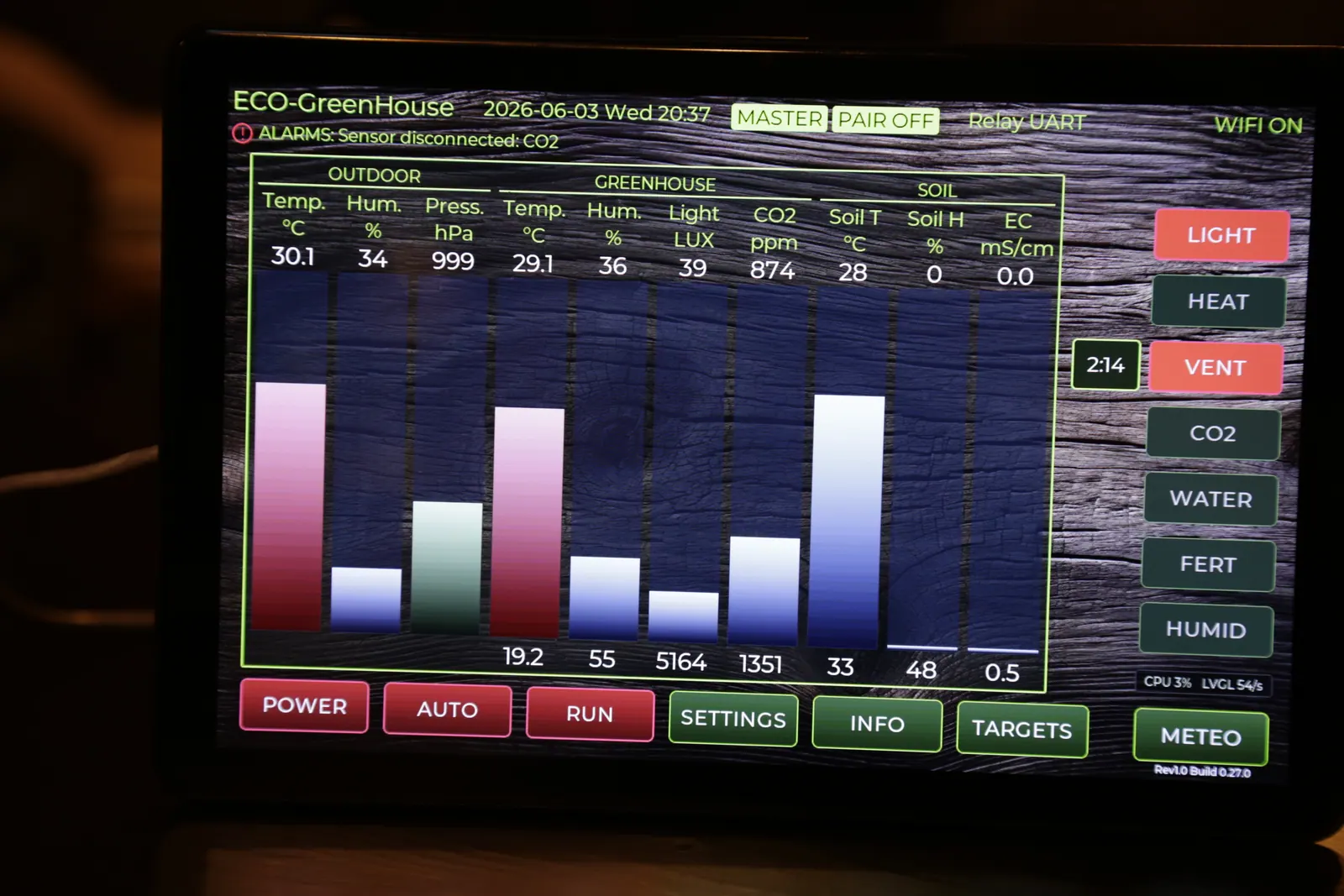
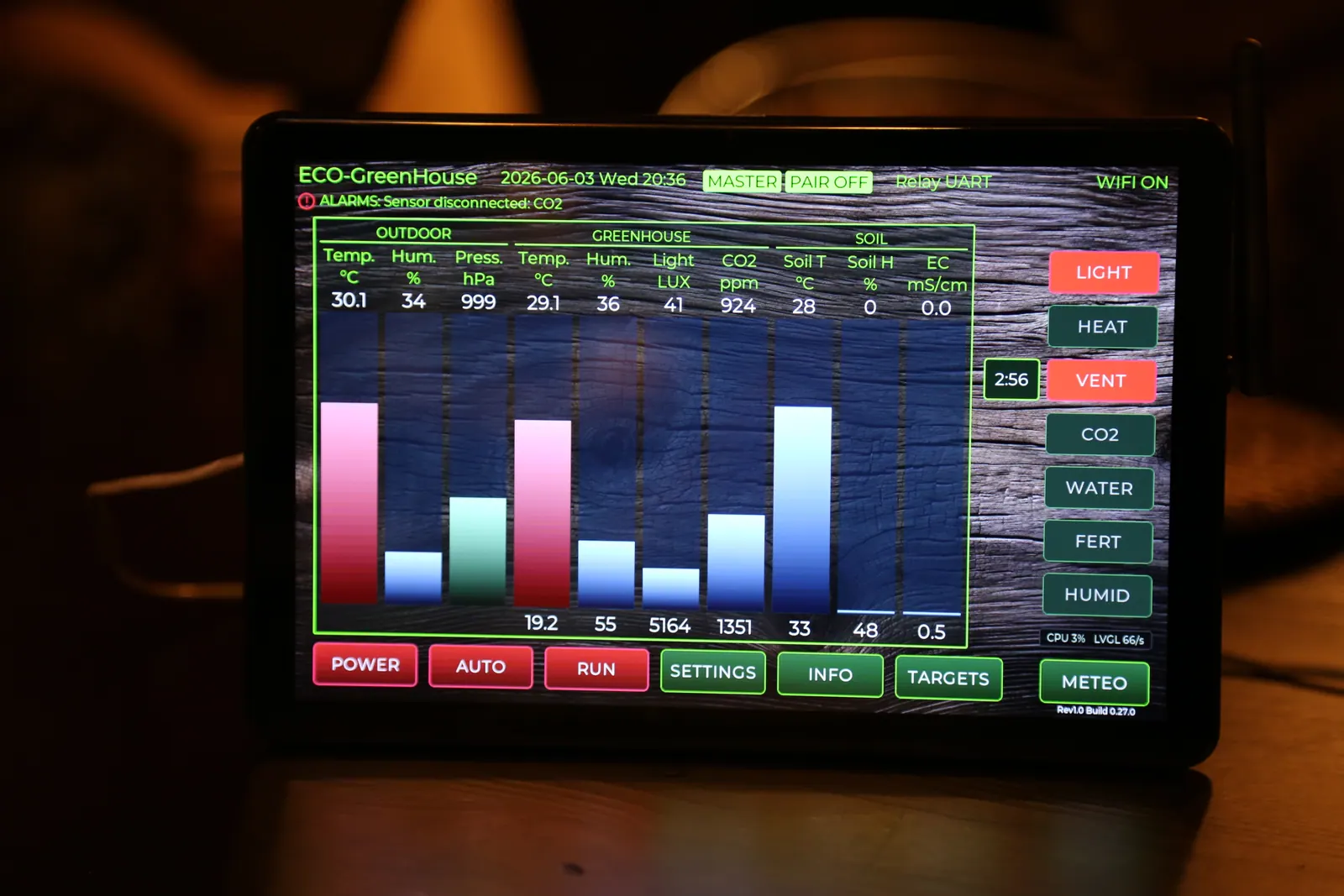
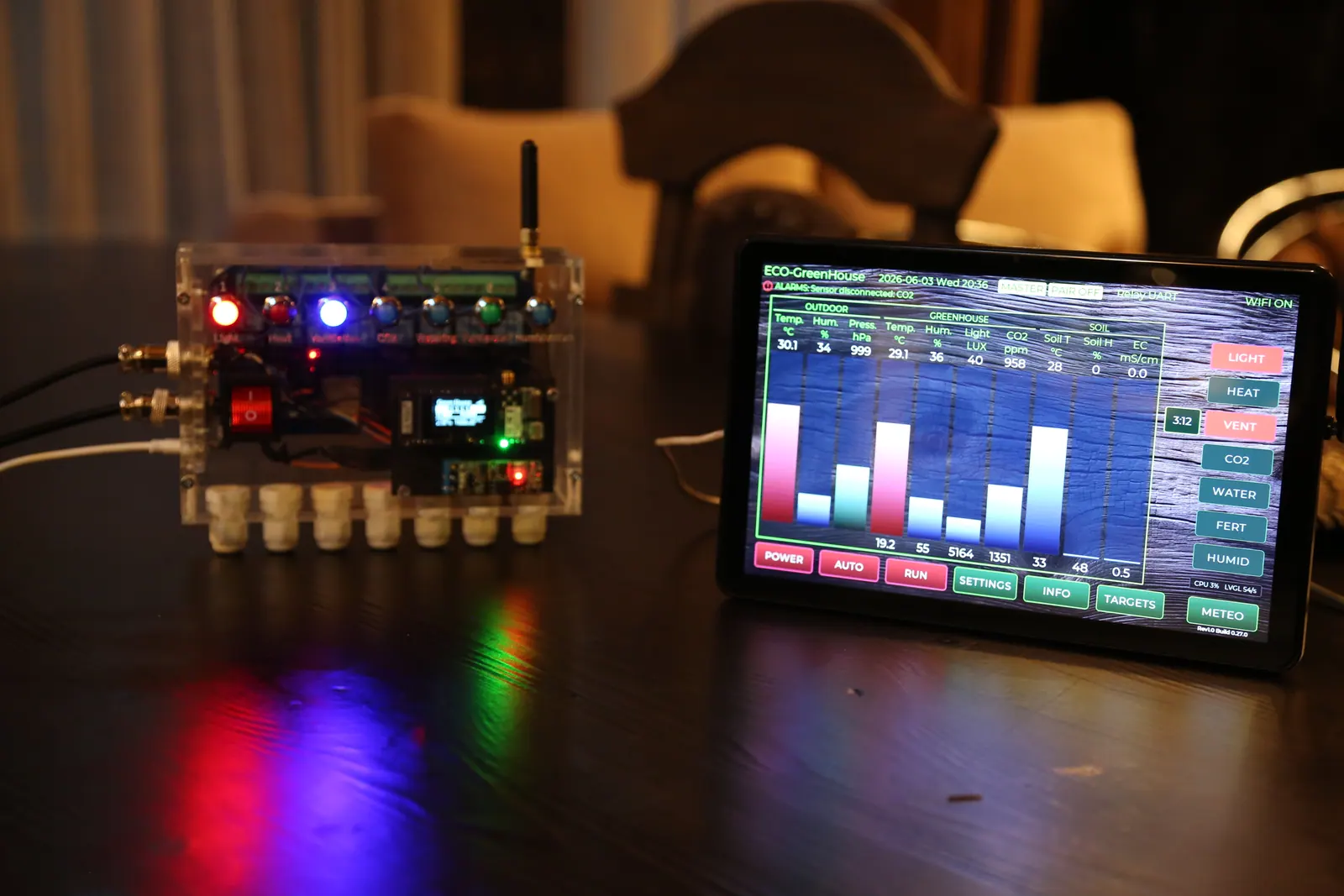
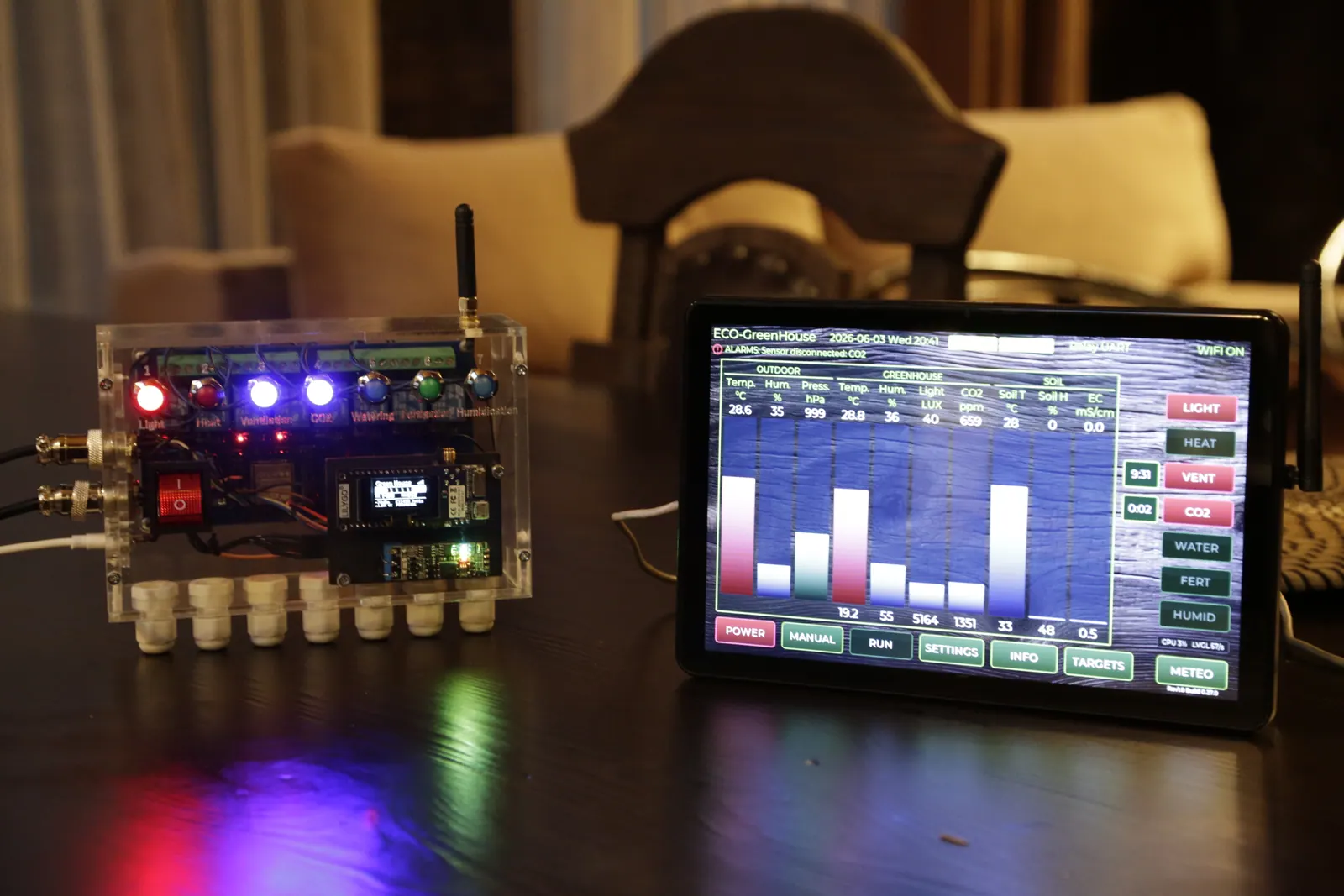
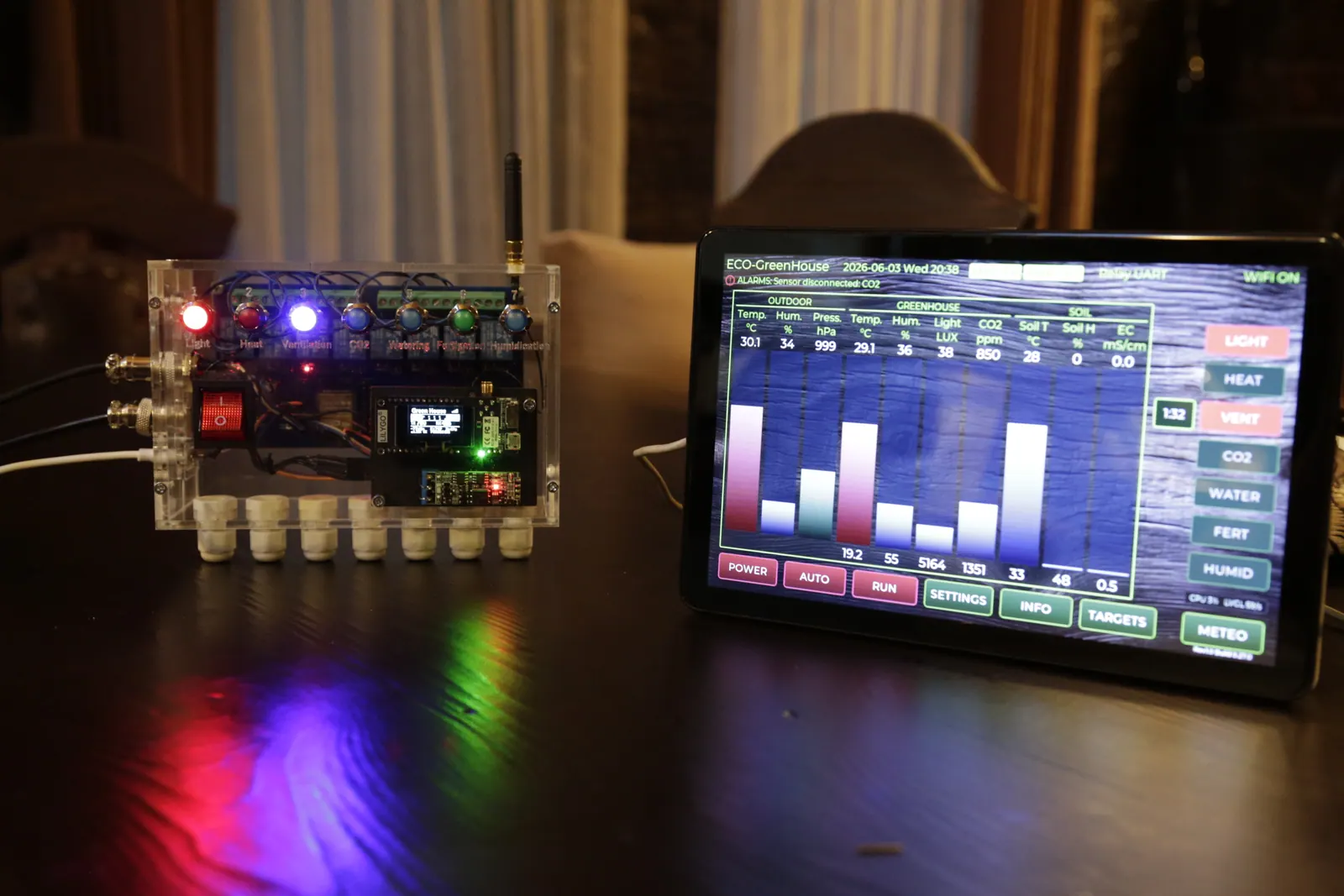
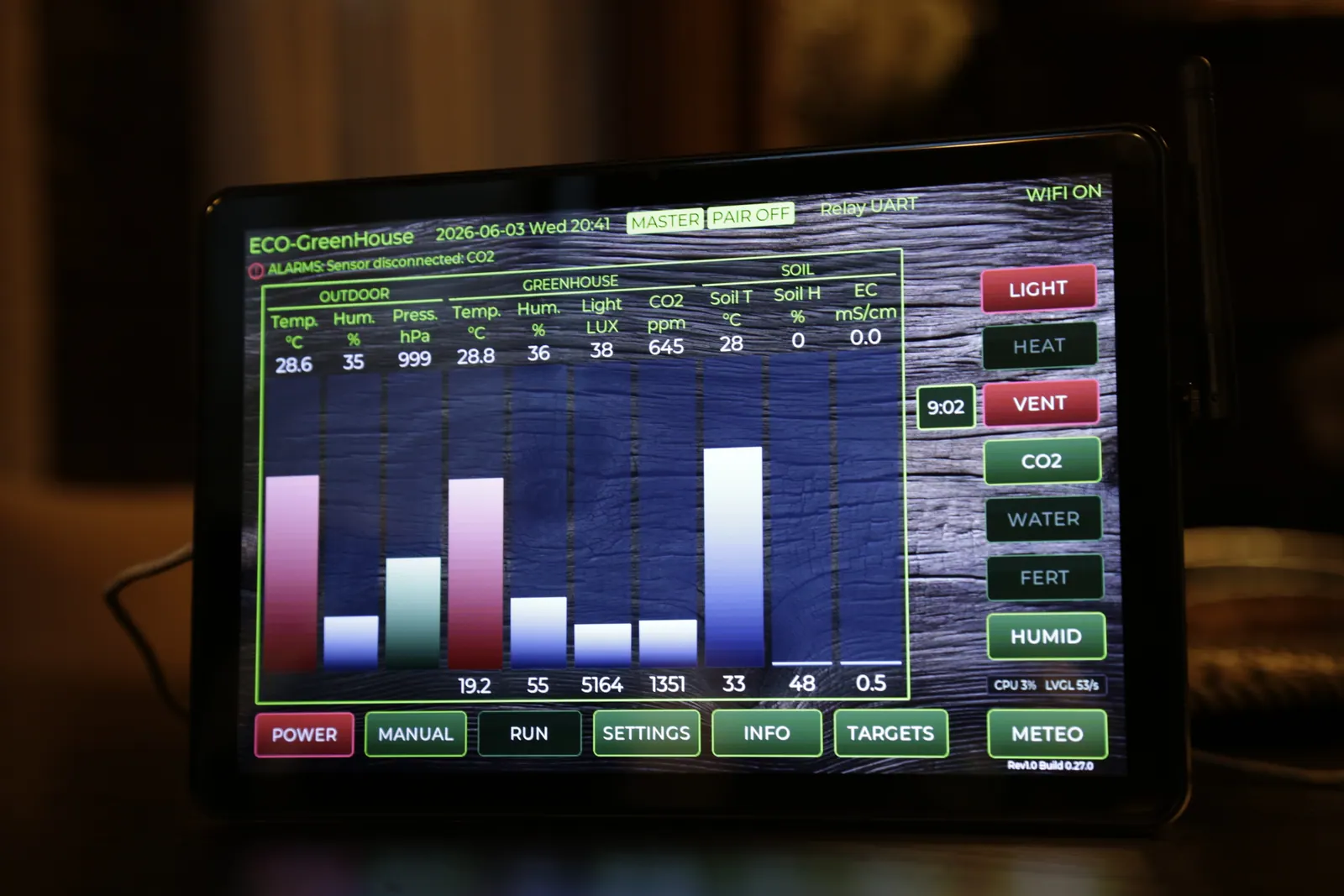
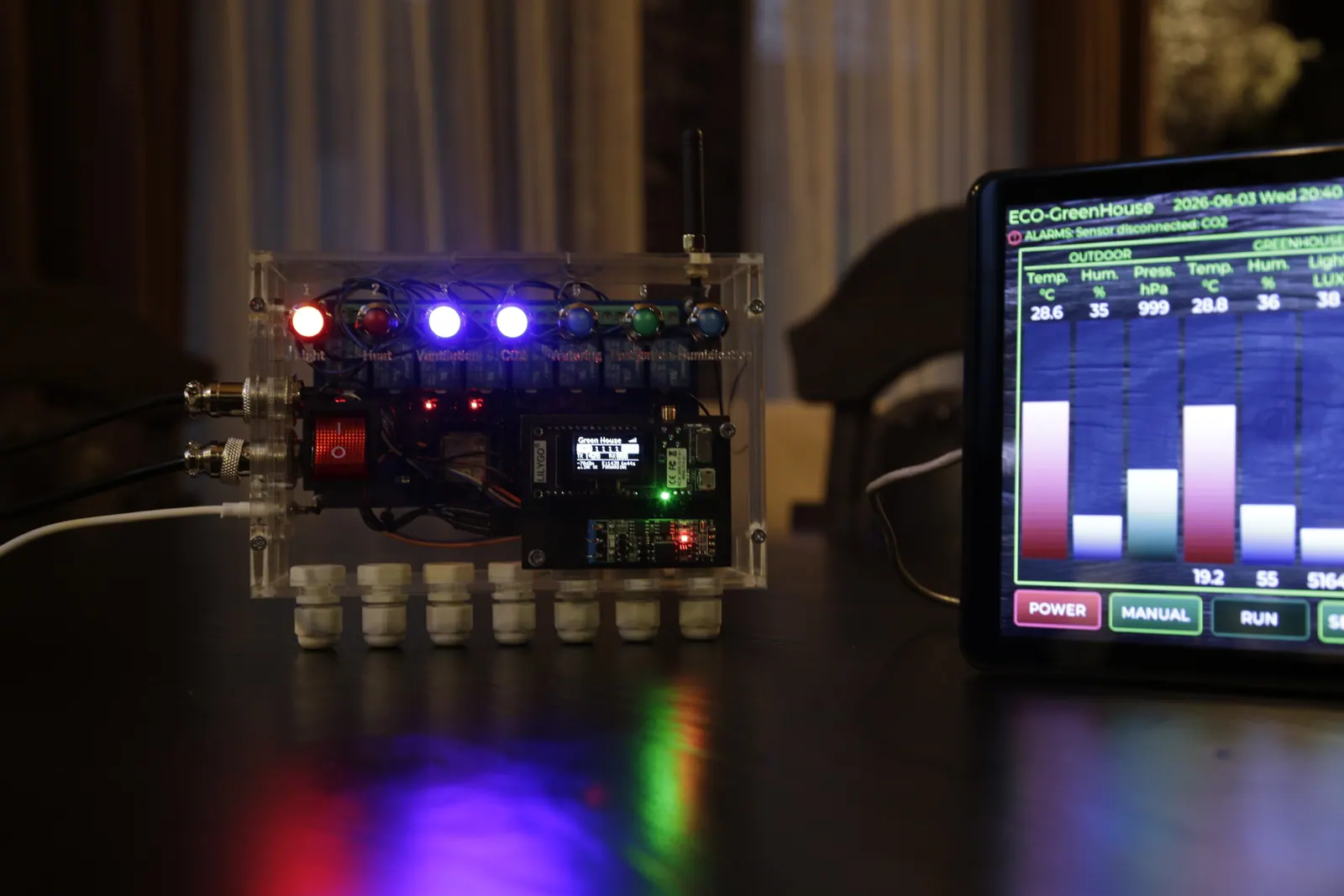
A large 10-inch screen on the greenhouse wall shows everything: 24-hour trends, irrigation history, the state of all seven load groups. Like a dashboard, only clear — touch it with a finger and everything makes sense.
Internet dropped — the panel keeps running. The logic for watering, heating and ventilation lives inside the device itself, not in a cloud. You come back a week later — plants are fine, and the full history of the past days is right on the panel.
Even if they are scattered across a field for 10 kilometers — LoRa bridges will link them into a single network without wires and without Wi-Fi. One app, one big picture. Want to see every site from your city apartment? Just point them at your own server.
Already running Home Assistant or another smart-home hub? Type the address in and the greenhouse joins your system as its own. Open protocols, no walled gardens. Your automation speaks the language everyone understands.
A 3 m² backyard tunnel? One panel and three sensors are enough. Liked the harvest, scaling up? Add relays, sensors, another panel. Same logic, same app. You grow naturally.
You are not buying a "black box". You are buying an automatic control and remote-access solution for your greenhouse. Your data is yours, the code is open, updates are free, tech support included. Want to move from your server to ours or the other way around — go ahead, the panel is not locked in.
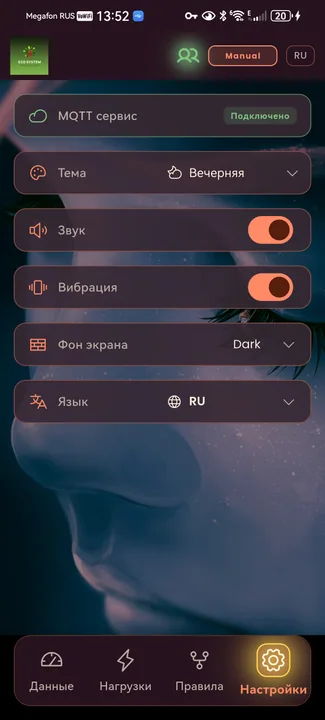
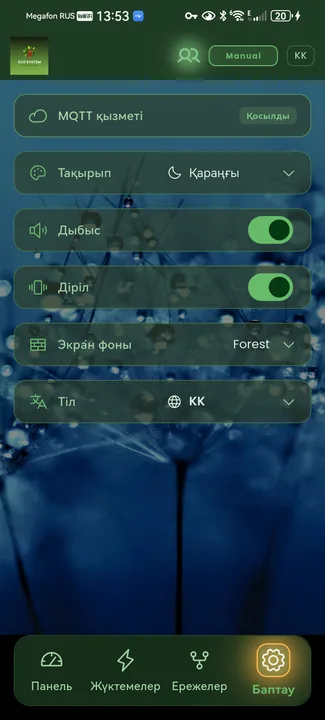
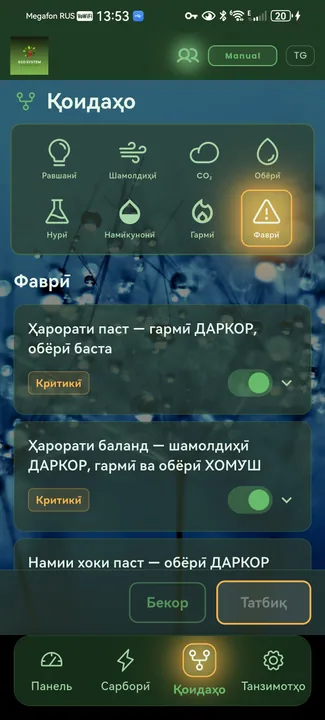
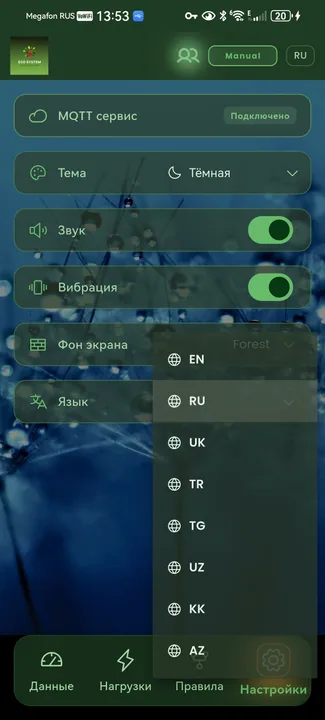
The app speaks eight languages — if customers ask for more, we will add their native languages. The control panel is in English and Russian (limited resources on the panel itself). Our engineering support for our customers is not limited to the warranty period. Write to us on Telegram or by email — we reply during business hours.
Write to us. We shape our production plan around your requests — for your greenhouse size, your crops, your budget. Everything, from firmware to soldering, we do ourselves. We will make your work a pleasure.
A touch panel, mobile app, LoRa bridges and cloud — one ecosystem that runs climate, irrigation and lighting around the clock. Works offline. Scales from 1 greenhouse to 100.
For farmers, home growers, smart-garden integrators and agricultural colleges — from a 3 m² tunnel to industrial hectares.
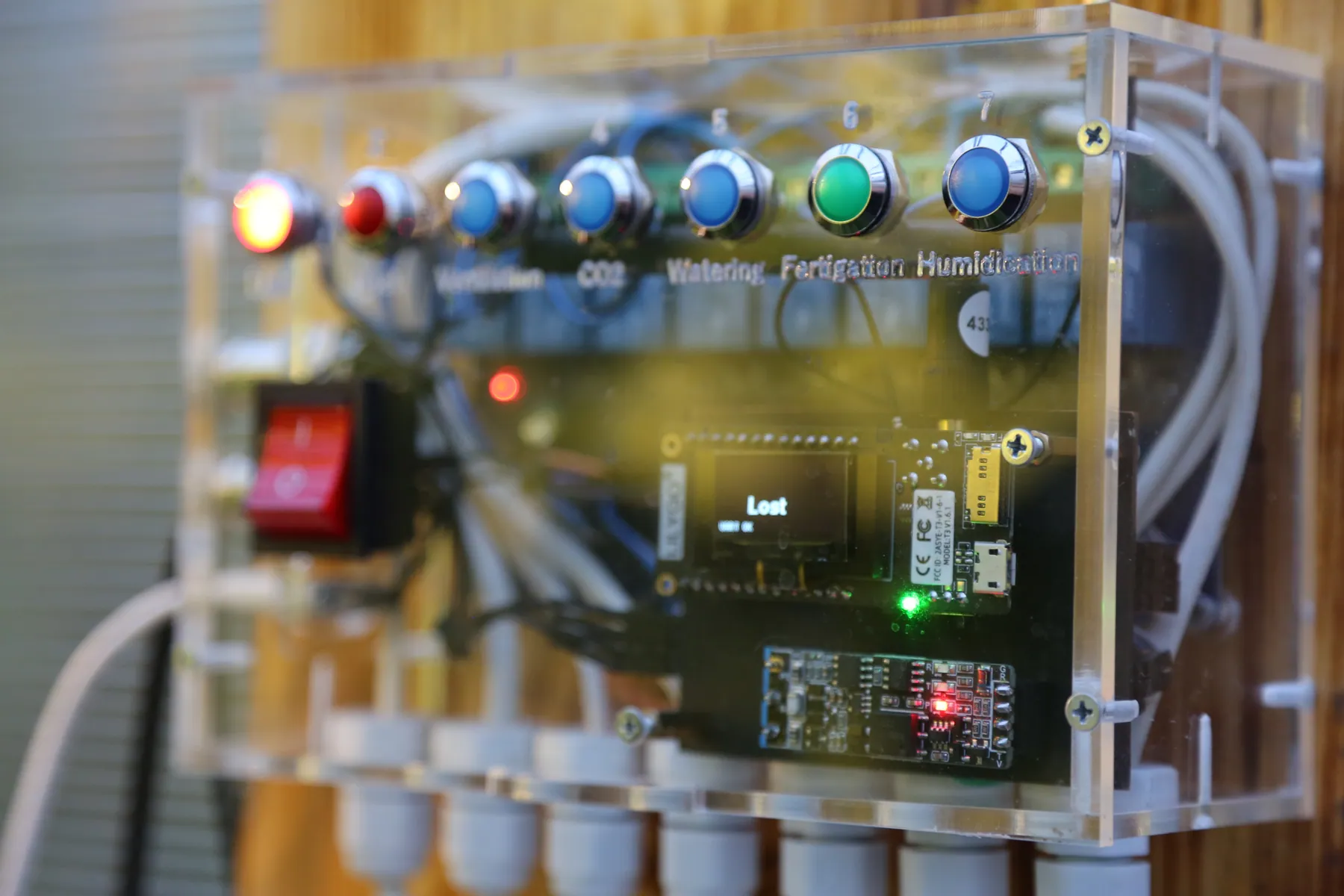
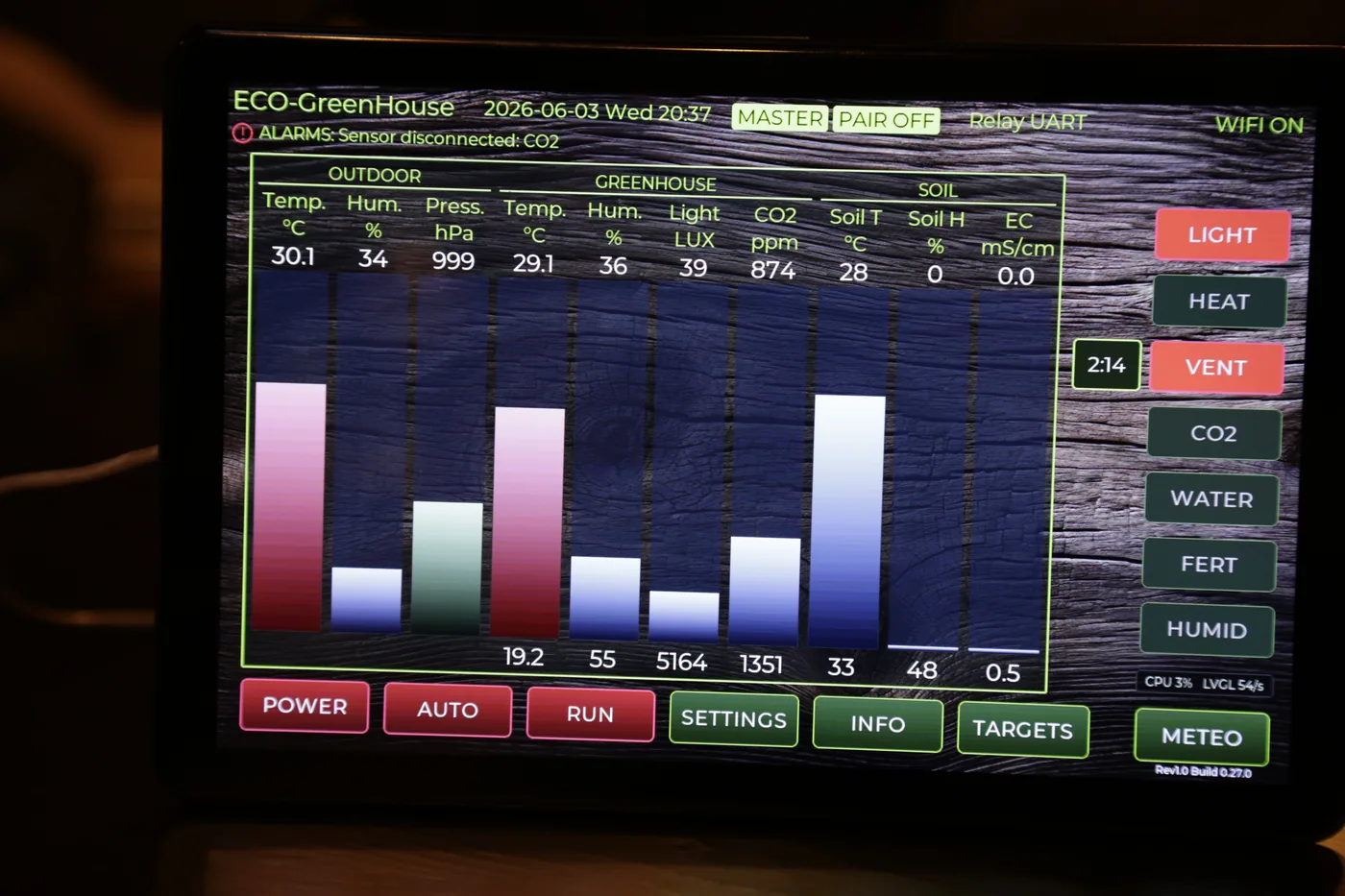
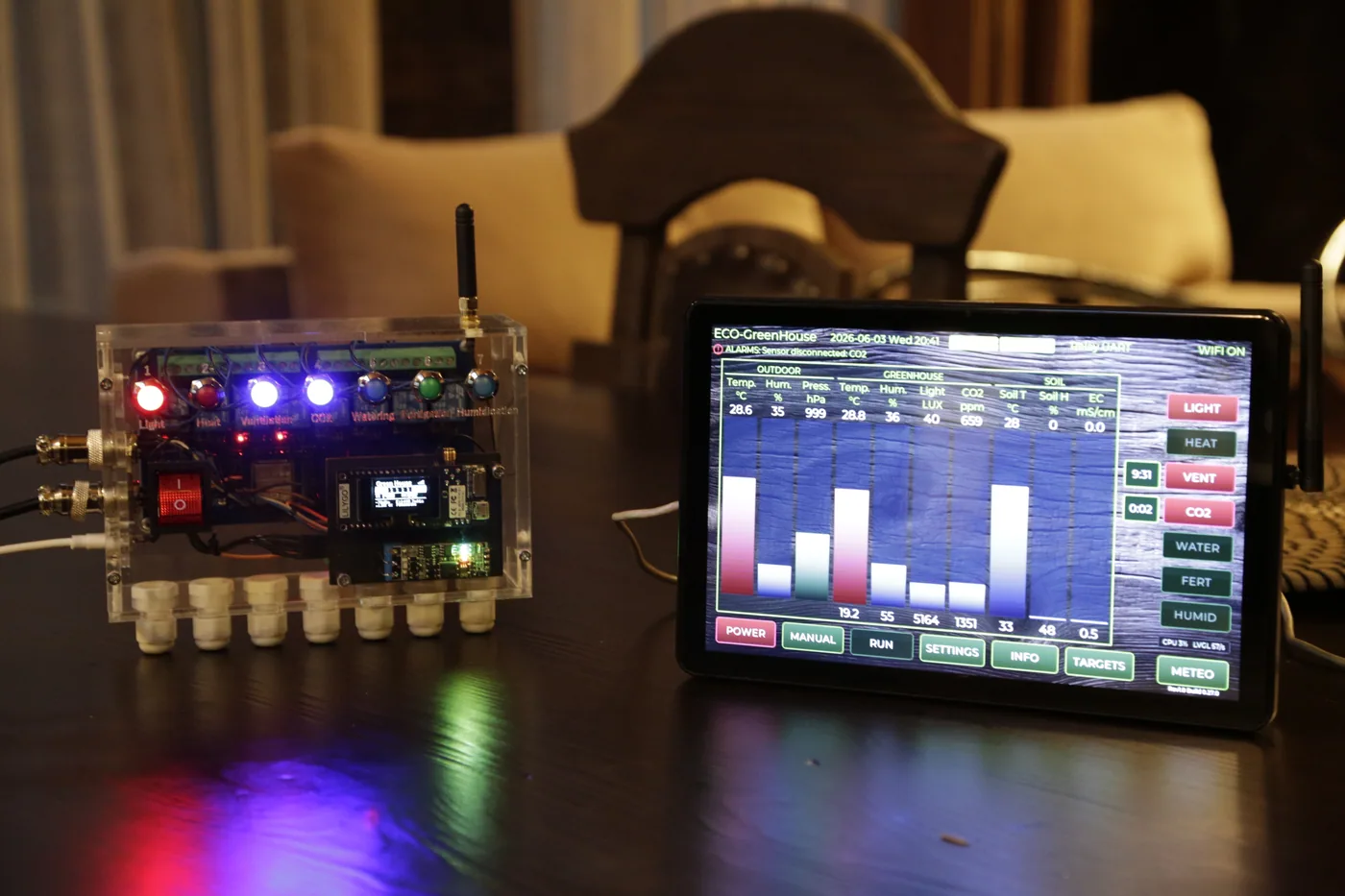
Old school: rotary timers, sticky notes, "turn the heater on at 6 a.m." New school: one panel, eight languages, and an algorithm that never forgets watering — even when you do.
Fifty timers, relays and "smart" plugs — each with its own remote, its own firmware and its own moods. One wrong click and a whole bed goes on a dry diet.
10 sensor channels, 7 load groups, 24-hour and seasonal trends — on a single touch panel and inside the app. Like an aircraft dashboard, only readable — and without the fear of anything falling off.
The heater stuck at minimum, temperature slid below zero. You found out in the morning — from the color of the seedlings. Nobody sent an SMS. Nobody was watching.
Alarm thresholds and hysteresis live inside the device itself, not in a cloud. Night dip? The heater is already up and a push is on your phone. In the morning you open the charts and see who did what.
Scaling up? Clone your agronomist. Logic does not travel between greenhouses, every one is wired by hand, and the master setpoint table lives in one head — the one currently on vacation.
Master ↔ Slave, LoRa bridges up to 10 km, an MQTT broker with as many panels as you like. Three greenhouses or thirty — same logic, same app, same agronomist. Only now they actually sleep at night.
The Western "smart greenhouse" costs about as much as a decent car. Plus subscription. Plus a per-device license. Plus a callout fee for the engineer. Cucumbers do not pay that well.
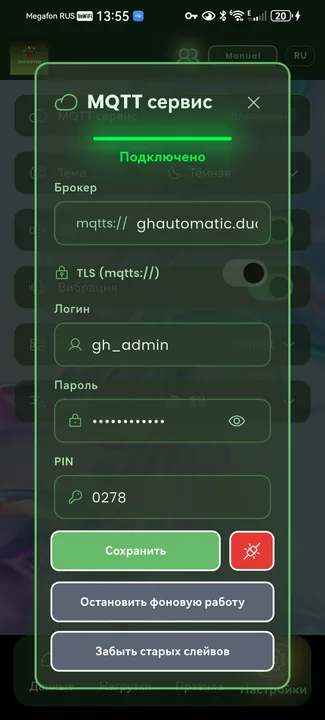
MQTT, HTTP, UART, LoRa — Mosquitto, EMQX, HiveMQ, Home Assistant, Node-RED, your corporate broker. None of "we only support our own cloud". Buy the hardware once, it just runs for years.
A season of growth history sits inside the vendor. Export is paid. Your own broker is not allowed. The vendor folds — three seasons of charts fold with it.
Locally on the SD card, on your own server, in our cloud — or all three at once. CSV export, open schemas, and a real "delete everything" button too. You will not need to leave — but if you do, the panel is not locked in.