10 sensor channels
Air and soil temperature, humidity, light in lux, CO₂, EC, pressure. Any I²C or RS485 sensor plugs in — from mainstream SHT31 to industrial probes.
Capabilities, the panel and the app — on a single page.
The solution — in one box: sensors, autonomous logic, a touch-panel controller or a headless unit with web UI, LoRa (if you need it), MQTT, a mobile app and our cloud (if you want it, of course). No "please buy another module".
Air and soil temperature, humidity, light in lux, CO₂, EC, pressure. Any I²C or RS485 sensor plugs in — from mainstream SHT31 to industrial probes.
Heating, lighting, ventilation, irrigation, CO₂ injection, humidification, fertigation. With a conflict matrix: heater and humidifier will not fire together — however much they want to.
ESP32-P4, 1280×800 screen, GSL3680 capacitive multi-touch, PSRAM, audio feedback. Need a headless greenhouse? A web-interface version runs straight from your phone.
Every controller — heating, watering, lighting — lives on its own. Hysteresis, schedules and alarm thresholds inside the device, not in somebody else’s cloud. Internet gone? Work continues.
Flutter, Android — install today, iOS — coming next. Runs as a foreground service, never killed by the OS, syncs settings between devices.
RU, EN, UK, TR, TG, UZ, KK, AZ. Full localization of UI, units, date formats and audio alerts. Not "Google-translated", but actual human localization.
Bridge_Lora on Heltec V3 links panels, sensors and relays in the field — up to 10 km line-of-sight or a self-healing mesh topology. No wires, no Wi-Fi.
Mosquitto, EMQX, HiveMQ, AWS IoT, Azure IoT Hub, Home Assistant, Node-RED — whatever you already run. TLS, QoS 0/1/2, retained, LWT. Corporate broker? Just paste the address.
Two panels discover each other over MQTT and sync over TCP. One master, one slave — shared logic, shared settings, one dashboard for two zones.
Every metric — once every 10 minutes to the SD card or to our server. Charts for a month, a season or a year, CSV export, power and water reports, side-by-side growing cycles.
In upcoming builds — a model trained on your data plus the Open-Meteo forecast: harvest timing, expected weight and risk alerts (stress, disease, low light).
Firmware arrives over the air. New sensors, algorithms and languages — no engineer visit needed. Something went wrong? One-tap rollback, no "we will be there on Wednesday".
ESP32-P4, ten sensor channels, seven load groups and the entire logic — inside the device itself. Not a "cloud client", a full-blown controller that keeps working when the router blinks.
Dual-core RISC-V at 400 MHz, 16 MB flash, external PSRAM. Enough headroom for the UI and background logic at once — no lag, no "please wait" spinners.
1280×800, IPS, hardware landscape orientation. Viewing angles wide enough to read the panel from anywhere in the aisle, not just head-on.
GSL3680 controller, multi-finger input. Works in gloves at +5 °C and with wet fingers at +35 °C — tested by an actual harvest.
Built-in UI sounds: a click, a ring, a "glass" chime on confirm. Quiet but audible — the panel talks back without shouting.
FAT filesystem with cyclic writes. Every sensor event and every relay toggle lands on the card. Internet goes down — the history stays put.
Built-in Wi-Fi plus a second radio via ESP32-C6 hosted EPPP — for anyone who needs two independent uplinks in one enclosure.
Settings are written to flash asynchronously with debounce. Slide a threshold back and forth — the flash sees only the final value, not every intermediate one.
A boot splash, dark and light themes, custom typography. The panel looks like a product — not "an engineering prototype on a breadboard".
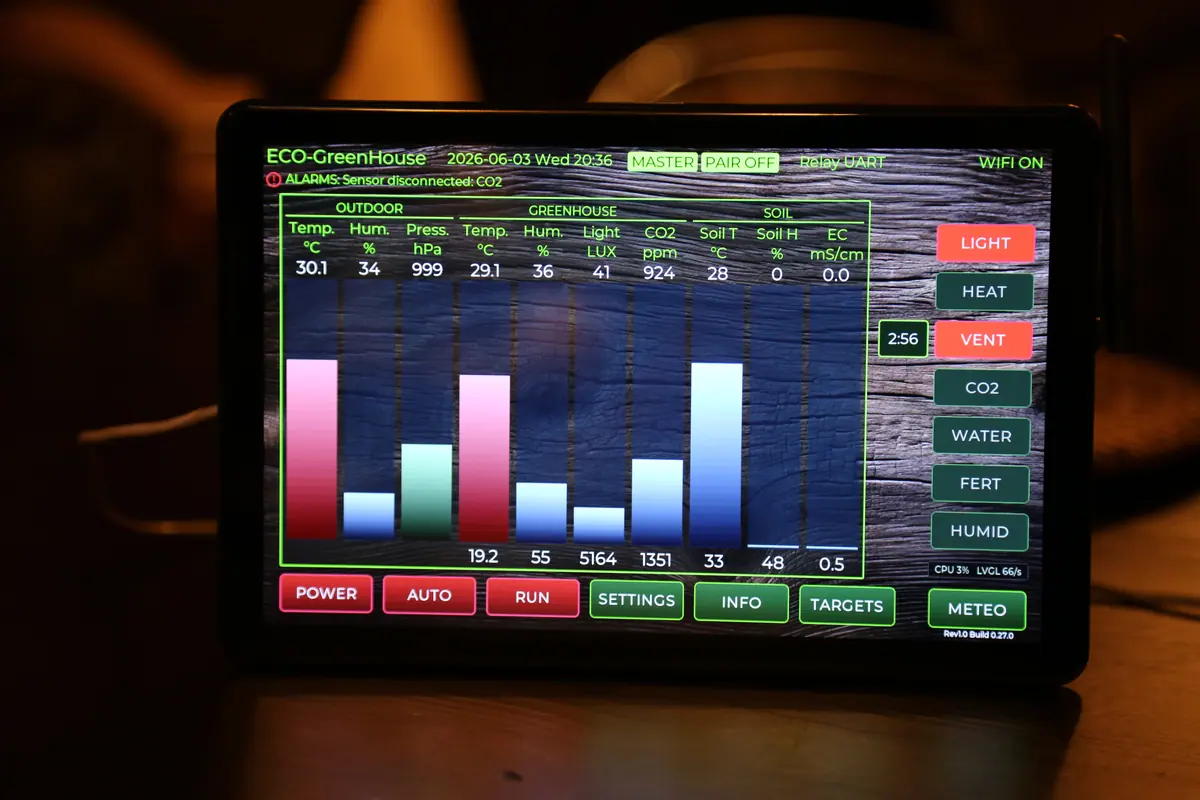
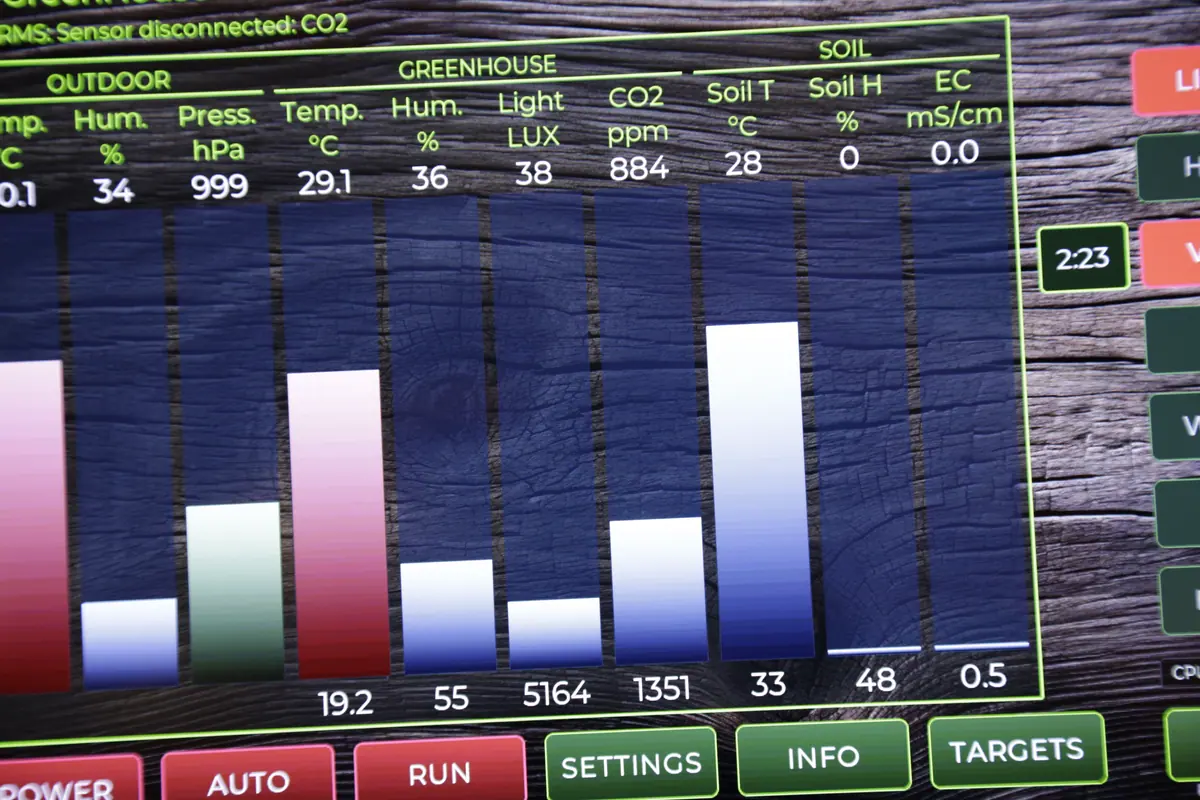
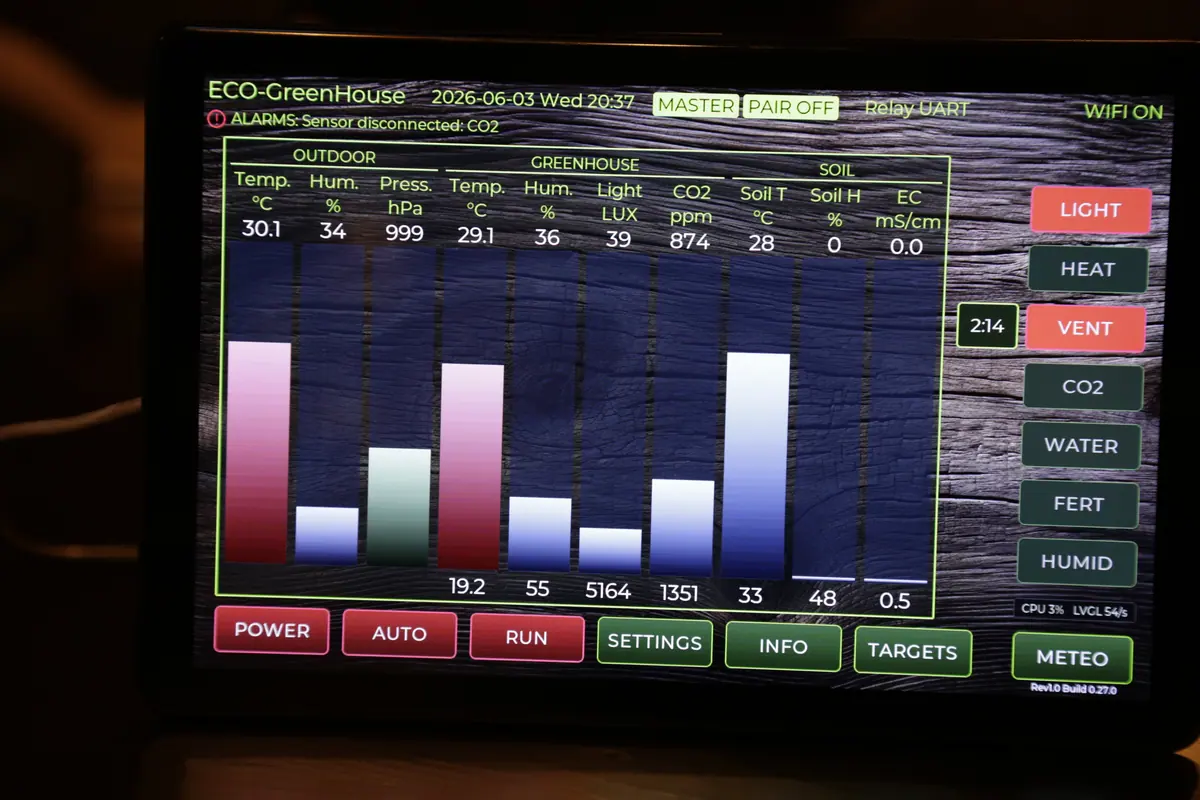
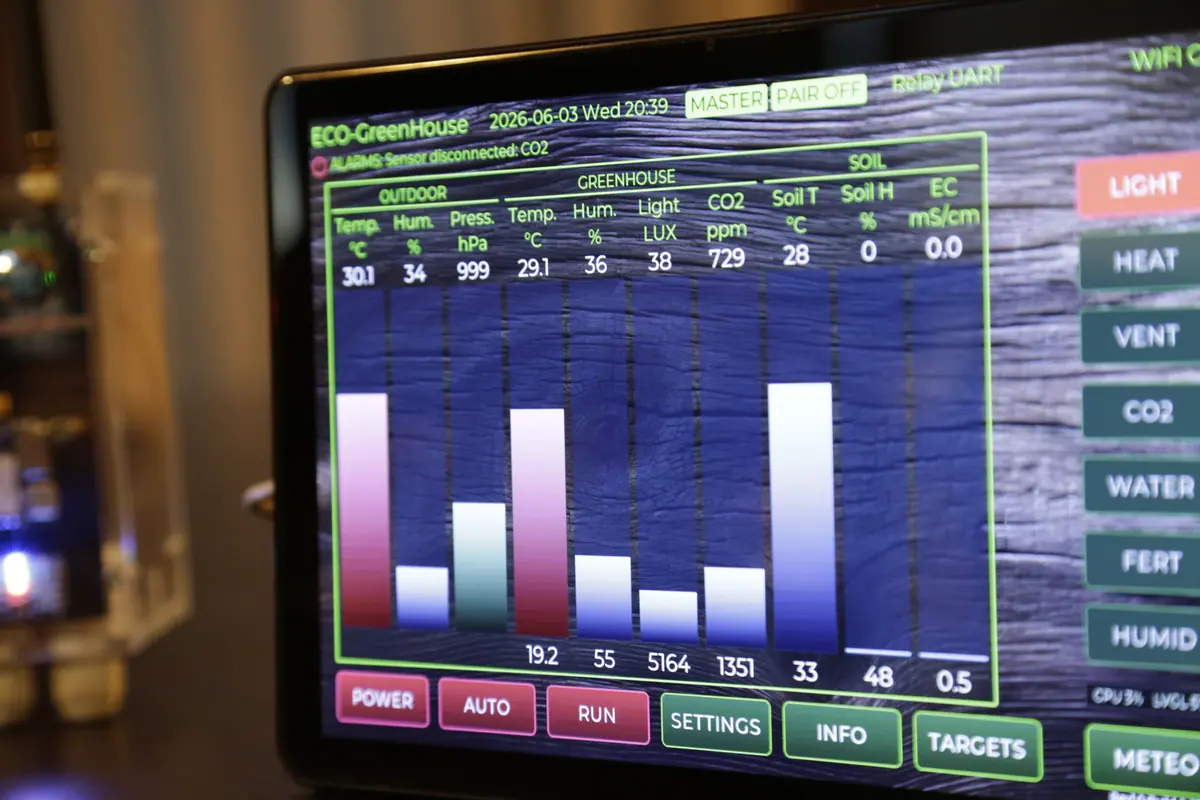
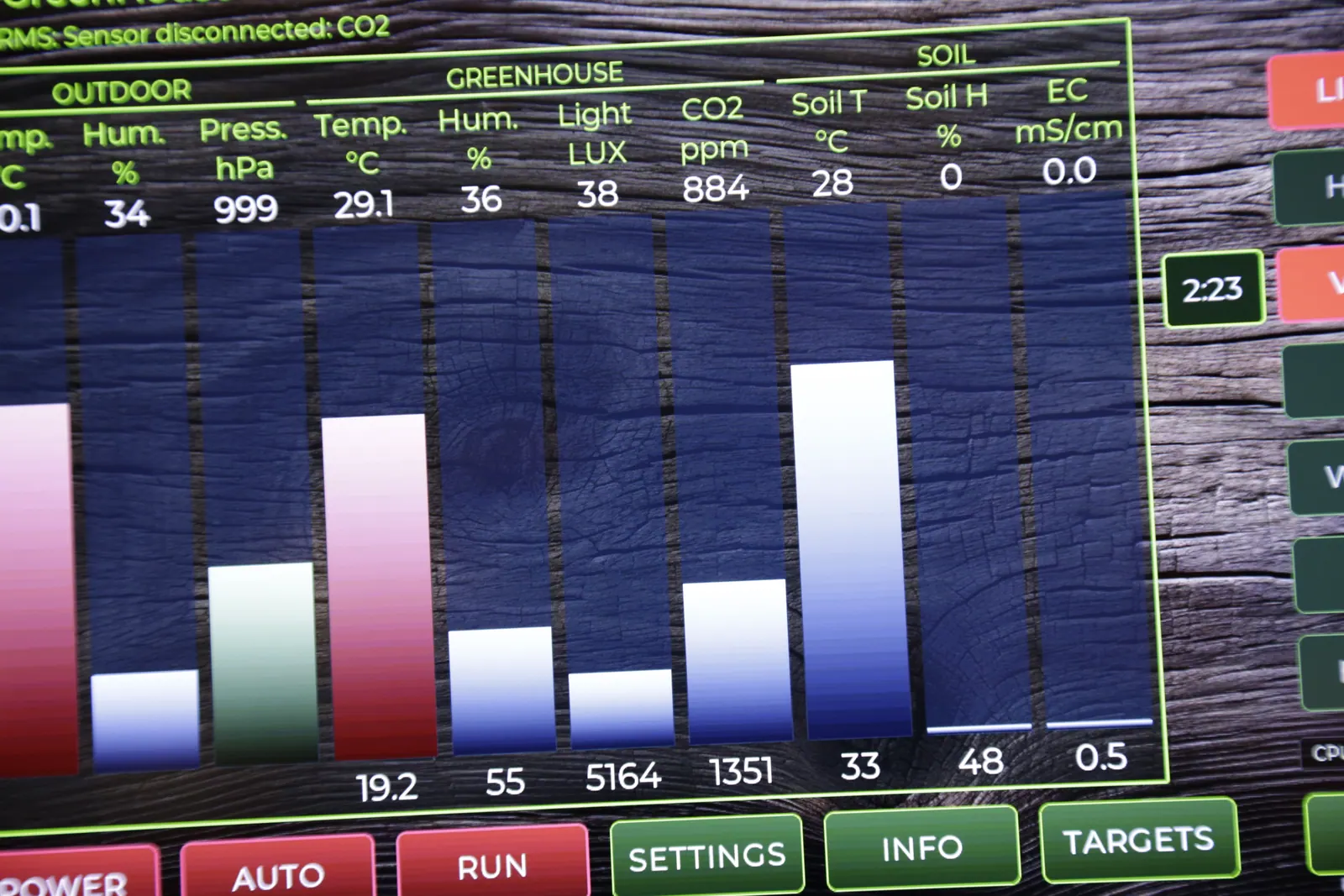
Air and soil temperature, humidity, light, CO₂, EC, pressure — a single strip refreshed every 80 ms. Faster than a blink.
Heating, lighting, ventilation, irrigation, CO₂, humidification, fertigation. Status LEDs, countdown to next fire, one-tap manual override.
POWER, MODE (Manual / Auto), RUN. Three states, zero ambiguity. Even on day one with the system — nobody gets lost on the toolbar.
Wi-Fi, setpoints, sensor calibration, alarms, Master ↔ Slave, SD log. Everything you need to configure — right on the panel, no laptop, no dongle.
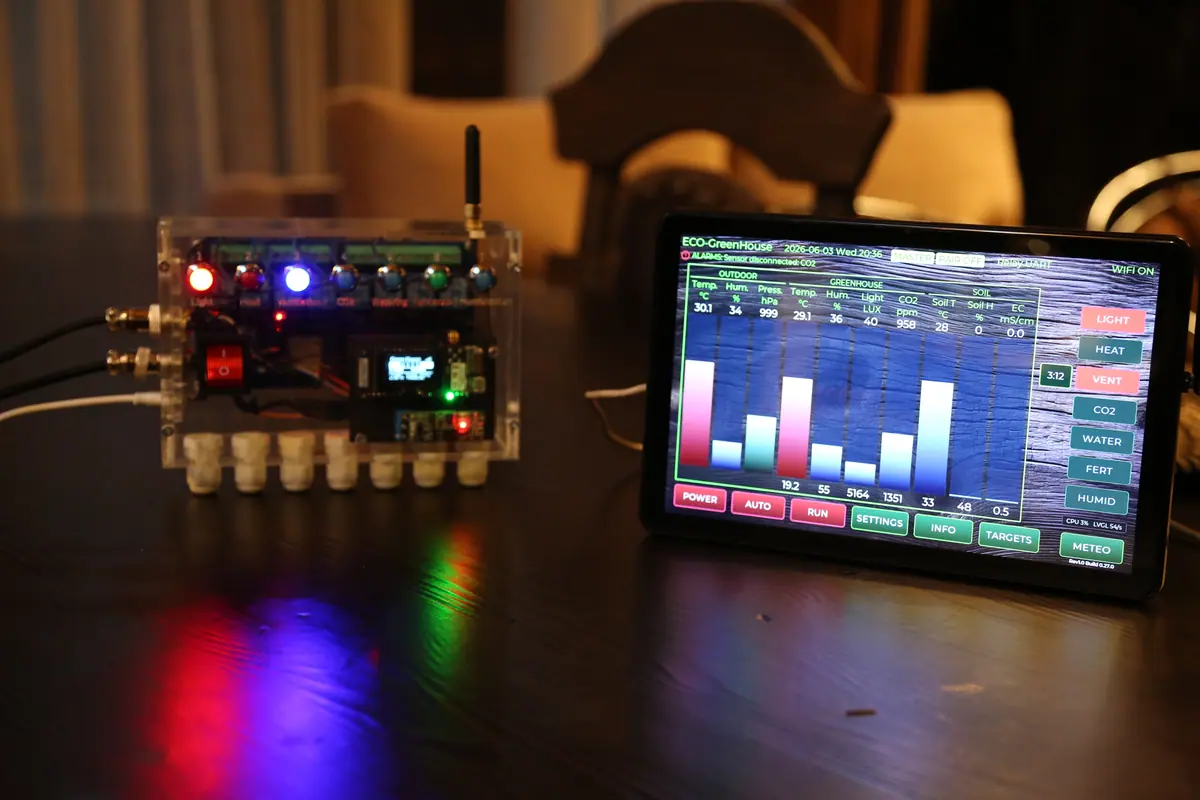
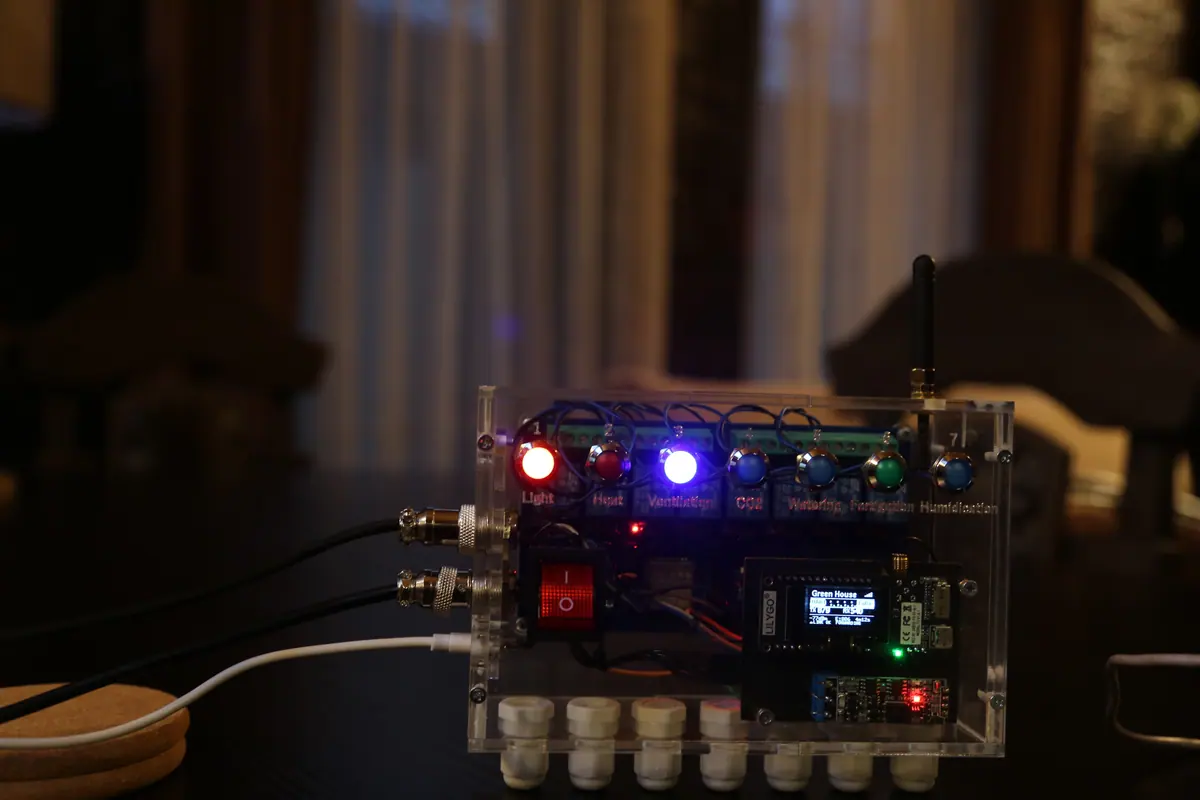
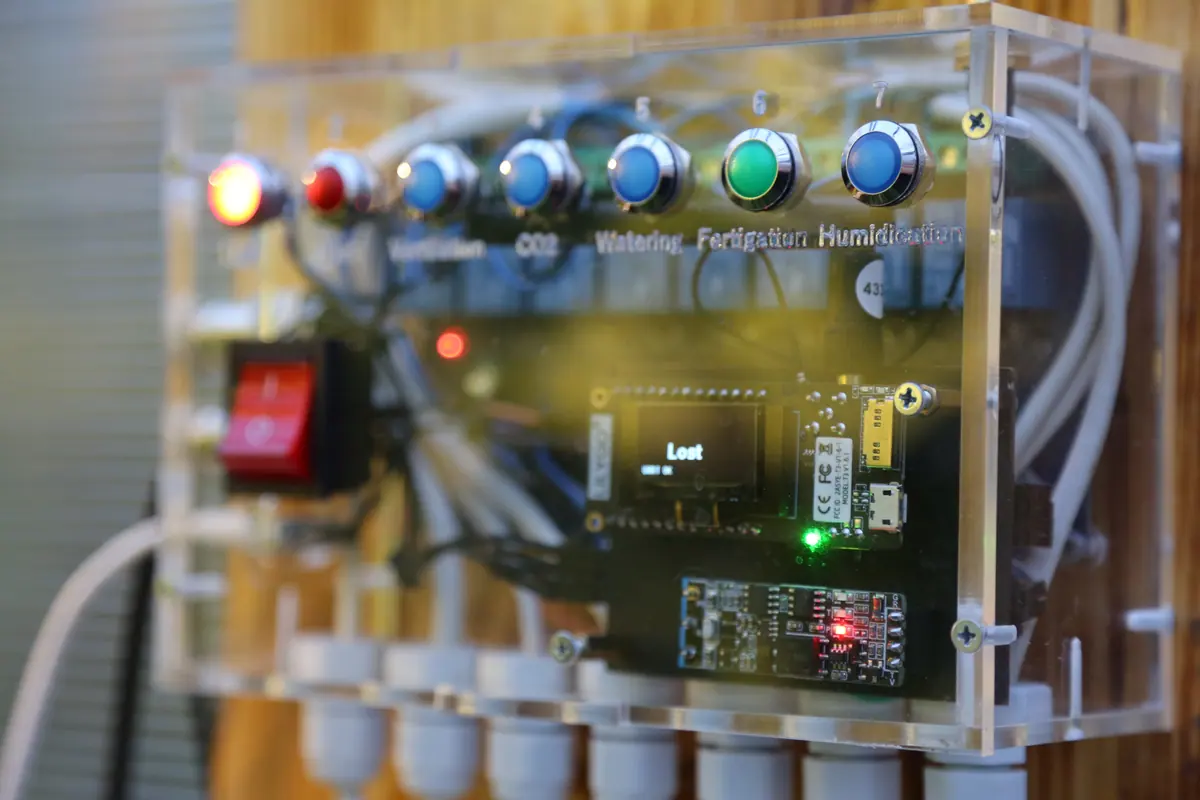
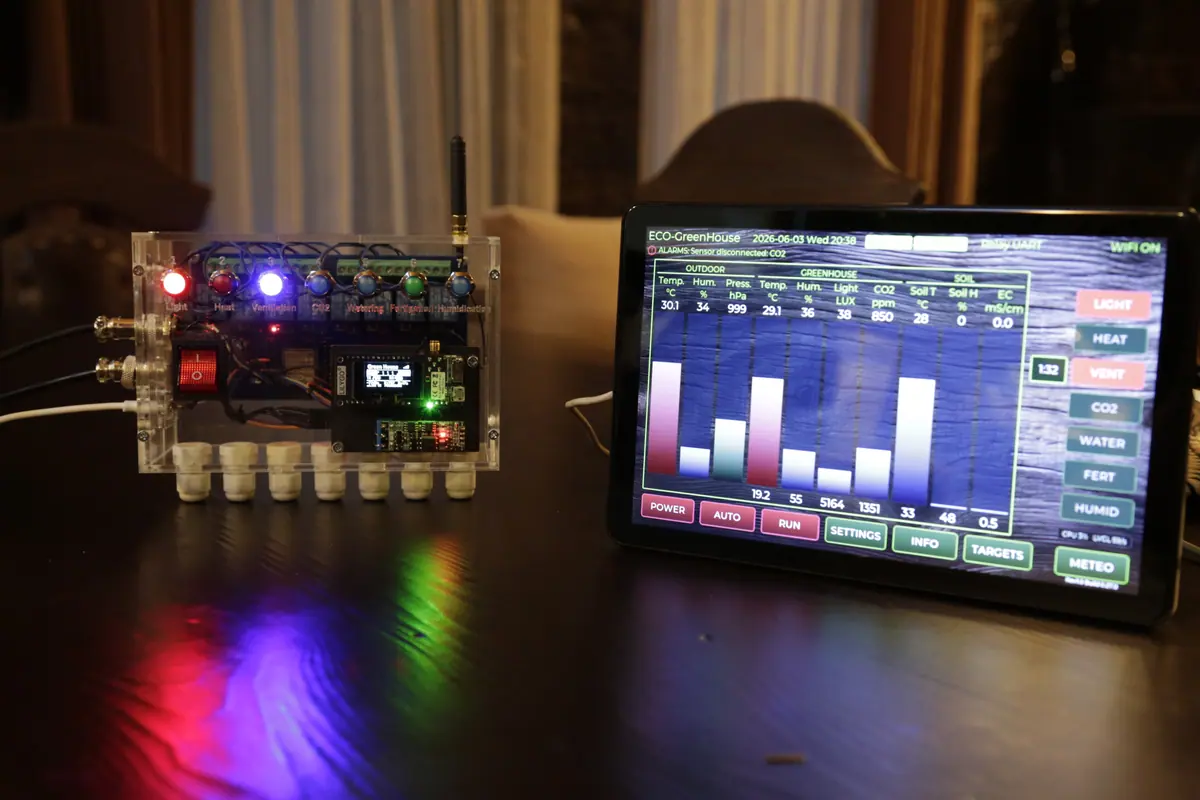
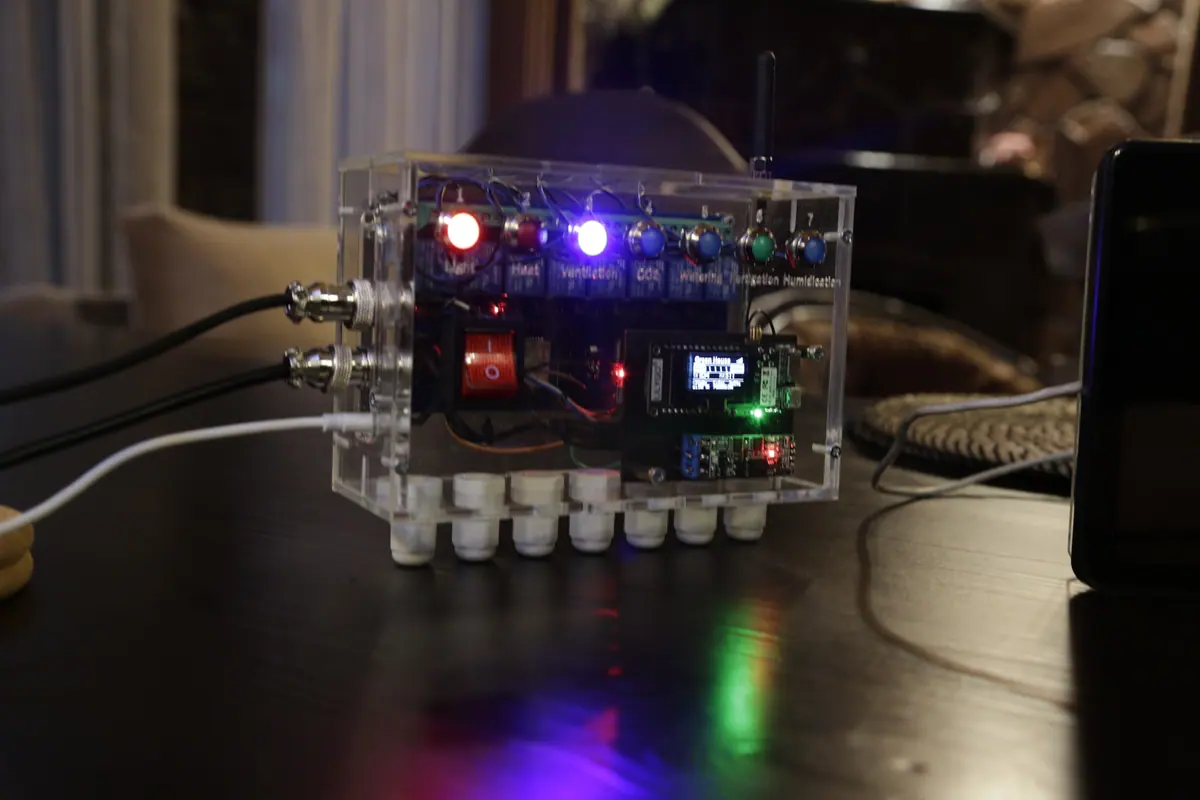
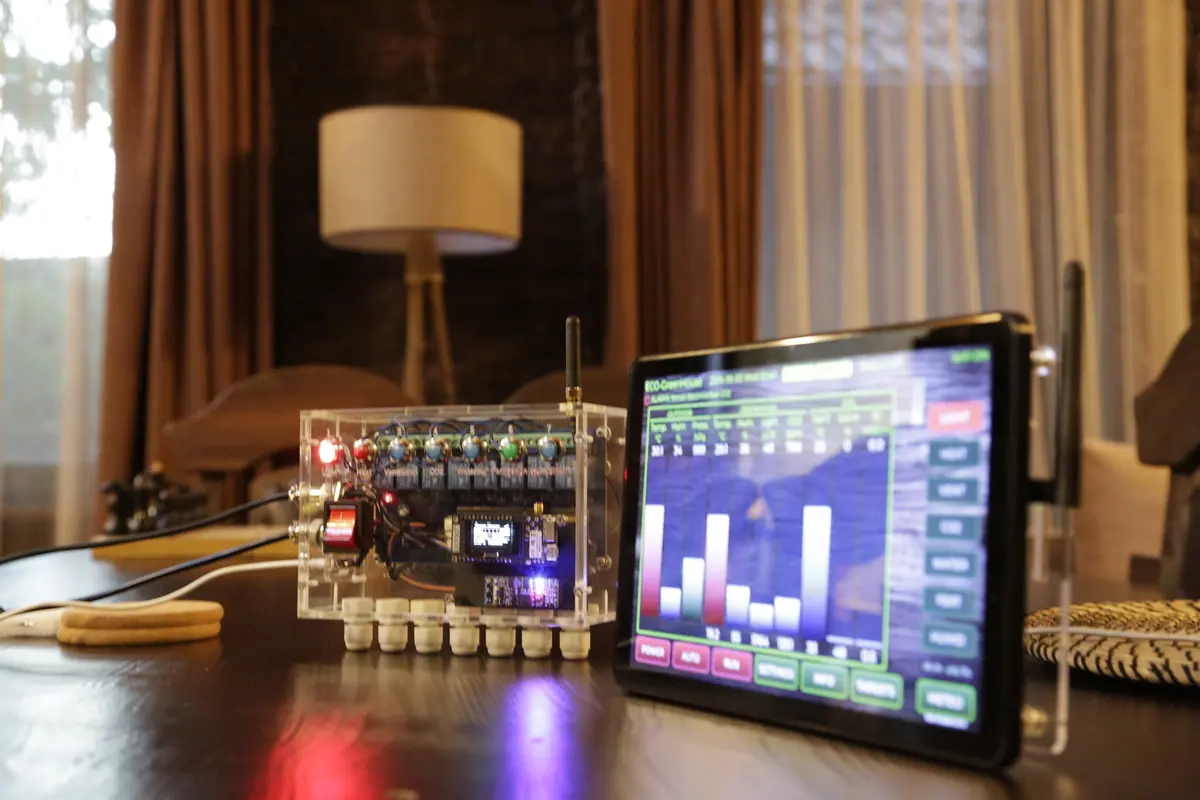
Photos of the main screen and the control unit (shipped as a kit with the 10″ panel).
Run your greenhouse from the field, from the car, from another country. RU · EN · UK · TR · TG · UZ · KK · AZ.
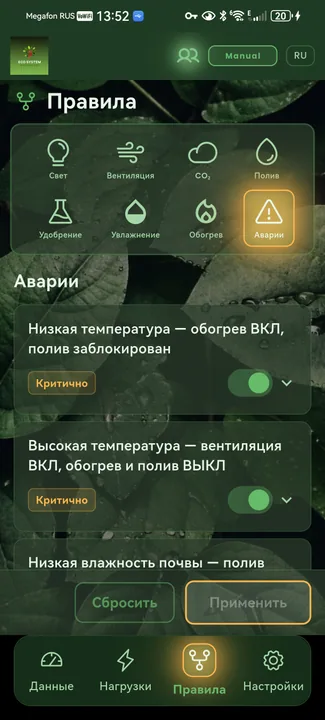
RU, EN, UK, TR, TG, UZ, KK, AZ. Human translation, not "Google".
LTE, Wi-Fi, weak signal — no drama. Large font, readable in sunlight.
Via MQTT broker or your own cloud. Roaming, vacation, business trip — same access.
Foreground service. Alarms and fires arrive even at night.
Temperature, humidity, CO₂, EC. Refresh every 10 s.
7 load groups, one tap each. Feedback on actual relay state, not "sent".
Home, dacha, industrial bay — one list. Swipe to switch.
Auto units (°C/°F). Large font for field conditions.
Real device captures. Dark and light themes.